Specialty Crop Management Certificate

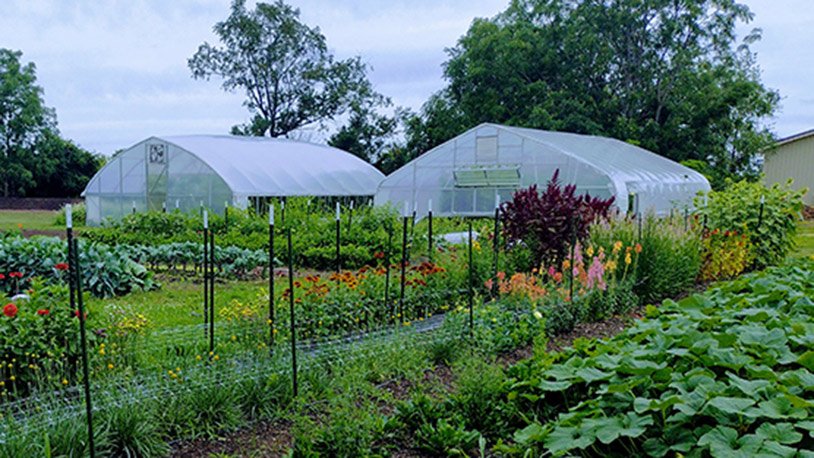
The Specialty Crop Management Certificate prepares you for careers in the rapidly growing specialty crop sector, focusing on fruits, vegetables, herbs, flowers, and other crops. Through a blend of classroom instruction, hands-on laboratory work in our greenhouses and on the MCC Student Farm, you develop the technical knowledge and practical skills needed to successfully produce, manage, and market specialty crops. This certificate program supports the growing demand for locally grown produce and specialty horticultural/agricultural products while emphasizing innovative, sustainable production practices.

You gain hands-on experience through classroom learning, greenhouse labs, and work on the MCC Student Farm. The program emphasizes sustainable production practices and develops the technical, management, and marketing skills you need to successfully oversee specialty crop operations and meet the growing demand for locally produced food and horticultural products.

Career and Academic Progression

  • Advanced Training: This certificate builds on the Specialty Crop Fundamentals Certificate, expanding your management skills while maintaining the same academic track.
  • Academic Credit: It stacks directly into MCC’s Horticulture AAS degree.
  • Career Outcomes: It prepares you for careers such as specialty crop manager, field production supervisor, or market garden coordinator. 

Contact (815) 455-8750 with specific questions about this program.

(in-district) Total Amount: $4,340.7

Credit Hours to Complete: 29

Weeks to Complete: 32


Loading... Loading...

Upcoming Events

    COURSE LIST Course Ids:

Career Outlook

Related Programs

What you need to know about getting your Specialty Crop Management Certificate (CIP 1.0304)

Total Specialty Crop Management Certificate Costs
Cost in-district out-of-district out-of-state international
Tuition $3,523.5 $12,670.68 $16,151.26 $16,151.26
Additional Costs $817.2 $817.2 $817.2 $817.2
Program Total $4,340.7 $13,487.88 $16,968.46 $16,968.46

What makes MCC's Specialty Crop Management Certificate program better than, or distinct from, similar programs at other institutions?

  • Learn on a Working Farm: Gain practical experience in a real production environment at the MCC Student Farm, not just a classroom.
  • Diverse Crop Portfolio - Not Just One Specialty: Instead of focusing on a single commodity, students work across multiple high-value crops from flowers to cut greens
  • From Field to Market: You’ll see the full cycle of specialty crop production and learn how to pack and market locally grown food and horticultural products for the community.
  • Emphasis on Sustainable Practices: Learn about both conventional and certified organic production practices to enhance sustainability
  • Expand Your Network: MCC's horticulture program has close ties with local industry, with multiple internship partners and field trip opportunities.
  • Access to MCC's Carey Center for Agrarian Learning: MCC's horticulture students can attend CCAL workshops and events for farmers and food entrepreneurs at reduced rates, and often for free.

Where will I put my knowledge into practice?

  • Build Job-Ready Production Skills: You'll gain hands-on experience growing crops from seed to sales.
  • Train in Real Production Environments: Working on the student farm and in the greenhouse, you will gain firsthand experience of real-world commercial production, not just controlled classroom exercises.
  • Solve Real-World Problems: Beyond just planting, you'll practice troubleshooting pest issues, optimizing soil health, and maintaining irrigation systems—the exact tasks you’ll face in a management role.

Back to Top ⇑


Semesters to complete assumes students are taking a full-time credit load of 12 credits per semester.

Proportion of students completing in normal time is the percentage of completers who earned the credential within the specified time of their first enrollment at the College.

Students attending part-time or changing their program of study are two common reasons why they may not complete in "normal" time.

Tuition and fees are set by the Board of Trustees. Prices for books and supplies are subject to change.

See additional information about international student costs.